


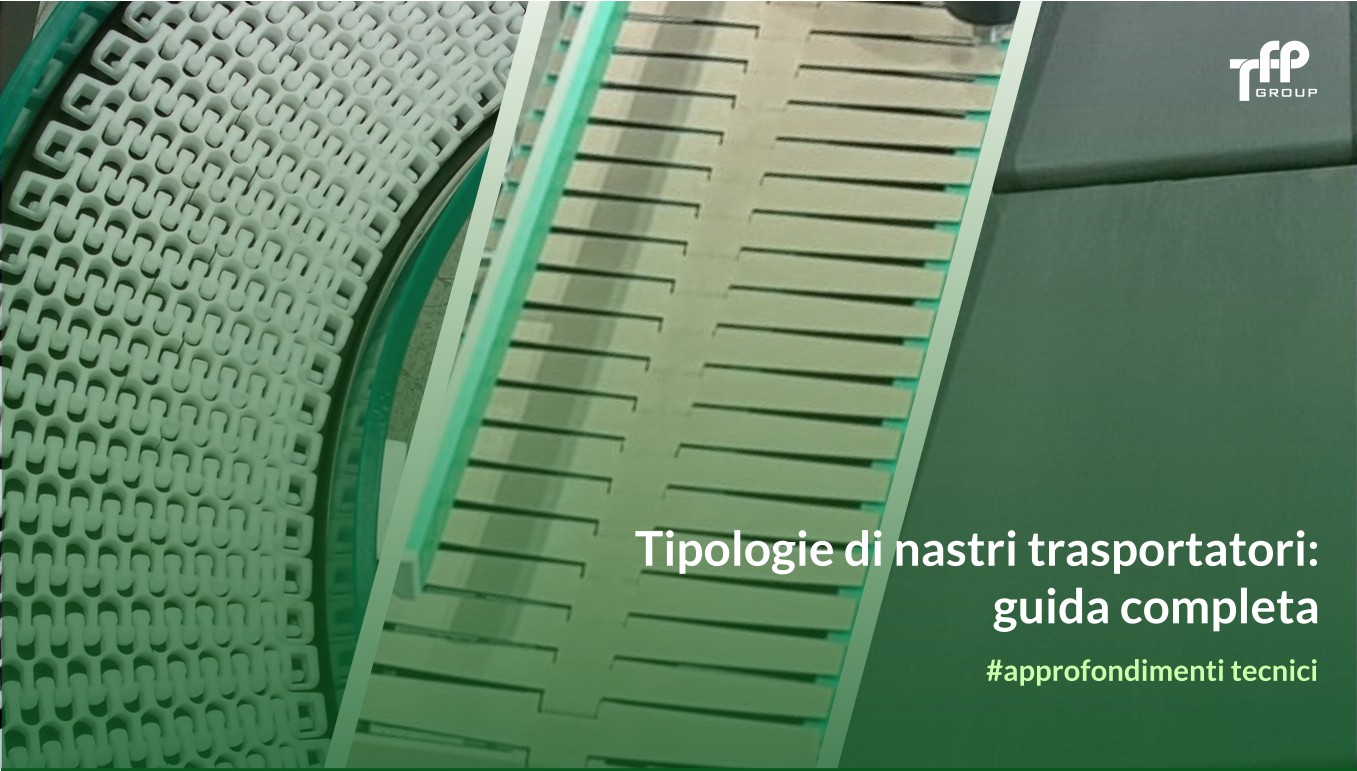
Choosing the most suitable handling system comes from knowing the different types of conveyors available. Each solution is designed to meet specific needs related to product, industry and working conditions.
In this guide we look at the main types and when to use them.
Carpet conveyor belts
Carpet belts are among the most popular due to their versatility. They use a continuous surface that allows products of different shapes and sizes to be conveyed.
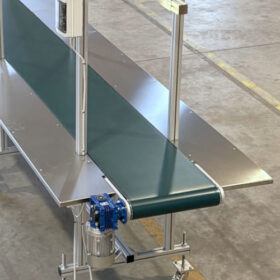
They are particularly suitable for:
- packaged products
- bulk materials
- industrial and food applications
They can be made from PVC, rubber or polyurethane mats, also with certification for food contact.
Modular tapes
Modular belts are composed of plastic modules assembled together. This feature makes them extremely durable and easy to maintain.

The main advantages are:
- high resistance to wear and tear and chemicals
- ease of replacing parts
- possibility of creating curvilinear paths
They are widely used in the food and pharmaceutical industries.
Table top ribbons
Table top systems use plastic or steel chains and are ideal for transporting packaged products, such as bottles, flasks or containers.

They find wide use in the lines of:
- bottling
- packaging
- cosmetic and beverage
They ensure precision and stability during transport.
Roller Conveyors
Roller conveyors provide a simple and effective solution for handling on a horizontal plane.

They can be:
- insane (gravity)
- motorized
They are ideal for:
- boxes and packages
- pallets and pallets
- end of line and logistics
Metal mesh ribbons
These belts are designed for heavy-duty applications and environments with extreme conditions.
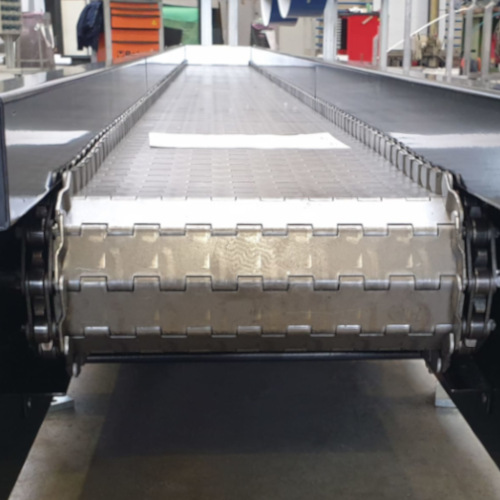
They are used for:
- transport of metallic materials
- high temperatures
- waste and scrap evacuation
The sturdy structure makes them suitable for industries such as foundries and machining.
How to choose the right type
There is no universal solution: the choice depends on several factors, including:
- type of product
- working environment
- loads and speeds
- need for cleaning or maintenance
For this reason, it is always advisable to evaluate each application in detail.
Knowing the different types of conveyors is the first step in designing an efficient and reliable line.
Each solution offers specific benefits; identifying the most suitable one will improve productivity and reduce costs over time.
Contact us to identify the best solution for your application.
Contatti Tieffepi
"*" indicates required fields