


Handling is often the real bottleneck
When thinking about the efficiency of a production line, the focus is often on the main machinery. However, one of the factors that affects productivity the most is how products are transferred from one stage of the process to another.
Accumulations, manual handling, poorly optimized routes or inadequate systems can generate slowdowns, increase processing time and reduce overall plant efficiency.
For this reason, designing an appropriate industrial handling system is crucial to ensure continuity and smooth production.
When a handling system is no longer efficient
There are some signs that indicate the need for action on the line:
- Frequent accumulation of product
- Repetitive manual operations between steps
- High waiting times
- Difficulties in line expansion
- Increased production stoppages
Even a line equipped with modern machinery can lose efficiency if the conveyor system is not designed properly.
What is meant by industrial handling system
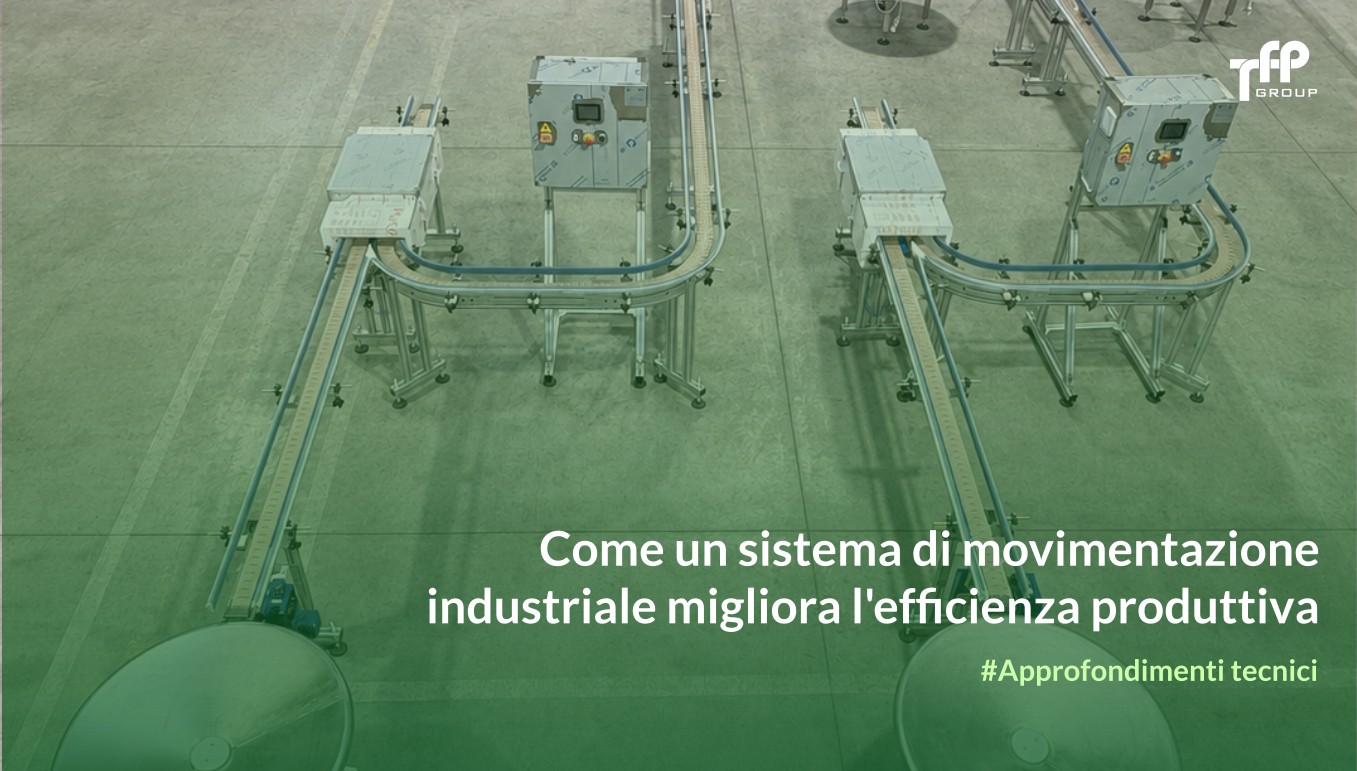
An industrial handling system includes all solutions for transferring products, packages, parcels or pallets along the production process.
Depending on the application, they can be used:
- Conveyor belts
- Modular tapes
- Roller Conveyors
- Pallet transport systems
- Rotary tables
- Accumulation and sorting solutions
The goal is not simply to transport a product, but to create a continuous and optimized flow between the different stages of production.
The benefits of proper design
A system designed on actual production needs yields many benefits:
- Higher productivity
Reducing transfer times and accumulations increases the overall production capacity of the line. - Reducing manual handling
Automating handling allows operators to focus on more value-added activities. - Better space management
Linear, curvilinear or multilevel pathways allow you to make the most of the available area. - Operational Continuity
A well-designed conveyor flow helps reduce downtime and improve plant reliability.
Each line requires a dedicated solution
There is no one-size-fits-all handling system.
The choice depends on many factors:
- Product type
- Weight and dimensions
- Required speed
- Production layout
- Area of application
- Desired level of automation
For this reason, it is essential to start with an analysis of the production process before defining the most suitable technical solution.
Conclusions
An efficient industrial handling system is not simply a means of transportation, but a strategic element in improving productivity, business continuity and line organization.
Investing in the proper design of production flows means reducing inefficiencies, optimizing resources, and preparing the plant for future growth needs.
Do you need to optimize your production line?
We design customized handling systems for various industrial applications, integrating conveyors, roller conveyors and automation solutions according to actual production needs.
Contact us for a dedicated technical consultation.
Contatti Tieffepi
"*" indicates required fields